
Founded in the 10th century
Tirta Empul dates to the 10th century and the Warmadewa dynasty, one of the early royal houses of Bali. The founding year is given as 926 in some accounts and 962 in others, so it is safest to say the temple is about a thousand years old. Tirta Empul history is told through its spring, which has fed the temple pools ever since.
The name points to the water. The spring is the reason for the temple, and the pools beside the courtyards are how people still use it today.
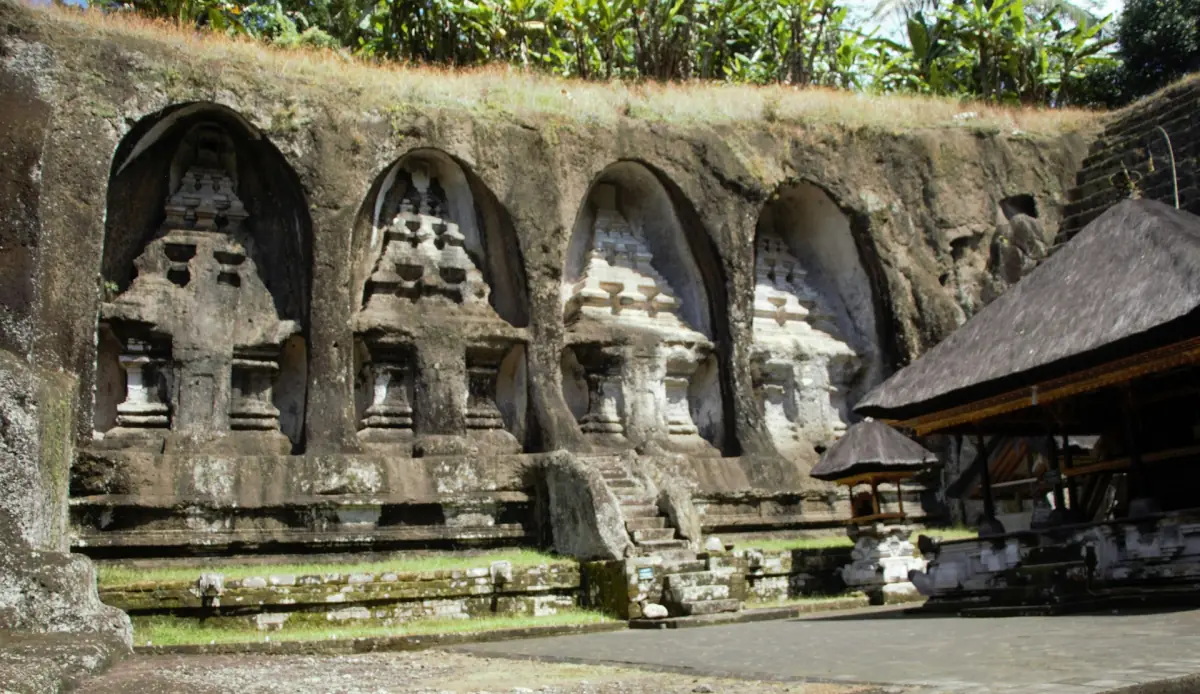
Our take: an archaeological route
This day tour links Goa Gajah, Tirta Empul and Gunung Kawi, with the entrances included.
Hand-picked tours, booked through GetYourGuide. Prices are indicative starting prices in US dollars (as of October 2026). Tap a tour for live availability and the current price in your currency.
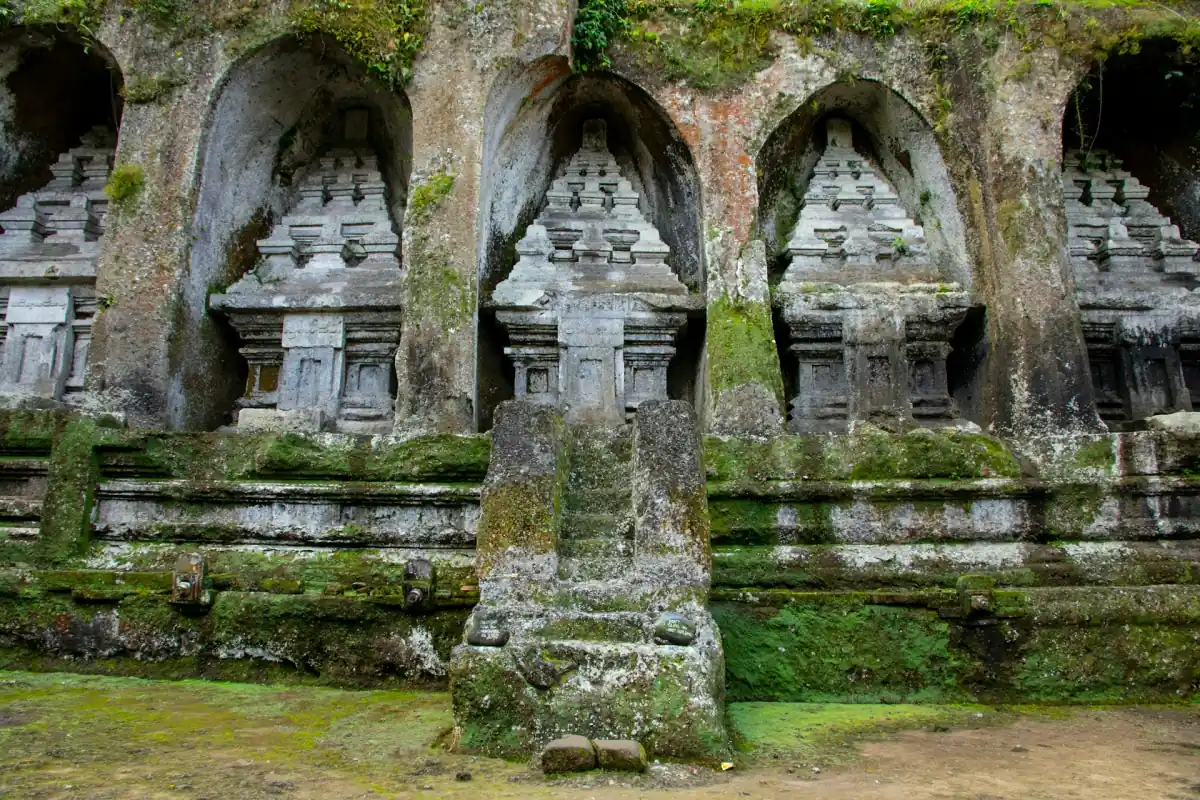
A day around the temple and its region
A full-day archaeological route with Tirta Empul, with live prices and availability.
The legend of Mayadenawa and Indra
A story told in Bali about the spring.
A legend explains where the water came from. Mayadenawa is said to have poisoned the water. The god Indra answered by creating a spring, and its water revived his warriors. The story is told as a legend, a part of the belief people keep about the spring, and not as a historical record.
That belief is why the water is treated as holy in the Balinese Hindu tradition. If you want to see how the pools are used today, read our guide to the purification ritual.
Tirta Empul today
Tirta Empul is a living temple of Balinese Hindus. The courtyards follow a set order: an outer court called Jaba Pura, a middle court called Jaba Tengah that holds the ritual pools, and an inner area called Jeroan. Visitors follow the rules for the temple, including respectful dress, which you can read about in the tickets and sarong notes.
Visits work around the daily life of the temple, so on some days there are more worshippers than usual. Plan your arrival with our opening hours page.
The presidential palace above the temple
On the hill above the temple stands the presidential palace of Tampaksiring. It is a separate site, not part of the temple ticket. You can find more on it and other sights nearby on our things to do near Tirta Empul page.
The ritual and the spring
Why the water matters to the temple.
Visitors come to Tirta Empul for the same reason the temple was built: the spring. In the Balinese Hindu tradition, Melukat is a religious purification with holy water, and its spiritual meaning is a matter of belief. Non-Hindus can take part if they behave respectfully and follow the local rules. The water feeds two purification pools with around 26 to 30 spouts.
The rite follows a set frame. Wear a sarong and sash, begin with a prayer and an offering called canang, enter the pool on the left and follow the open spouts to the right. Two outlets are kept for funeral ceremonies and are skipped, and staff or a guide will show you which. Do not swallow the water and do not use soap.
Rules for visitors also protect this history. Dress respectfully, do not take inappropriate photos, do not climb on anything sacred and keep the springs clean. If you want to see the sacred water and the courtyards on a longer route, a full-day tour links Tirta Empul with Goa Gajah and Gunung Kawi. Our purification ritual guide goes through the steps and our tours page lists ways to visit.
Frequently asked questions
When was Tirta Empul built?
In the 10th century under the Warmadewa dynasty. The year is given as 926 or 962.
What is the legend of Tirta Empul?
Mayadenawa poisoned the water, and the god Indra created the spring to revive his warriors. It is a legend and part of the Balinese belief about the spring.
Is Tirta Empul still used for worship?
Yes. It is an active Balinese Hindu temple, and the pools are used for religious purification.
Is the palace above the temple part of the visit?
No. It is a separate site with its own rules, and it is not covered by the temple ticket.